Hall-effect thrusters
2026-02-11 07:51
Status: #child
Tags: #aerospace #engineering #physics
Hall-effect thrusters
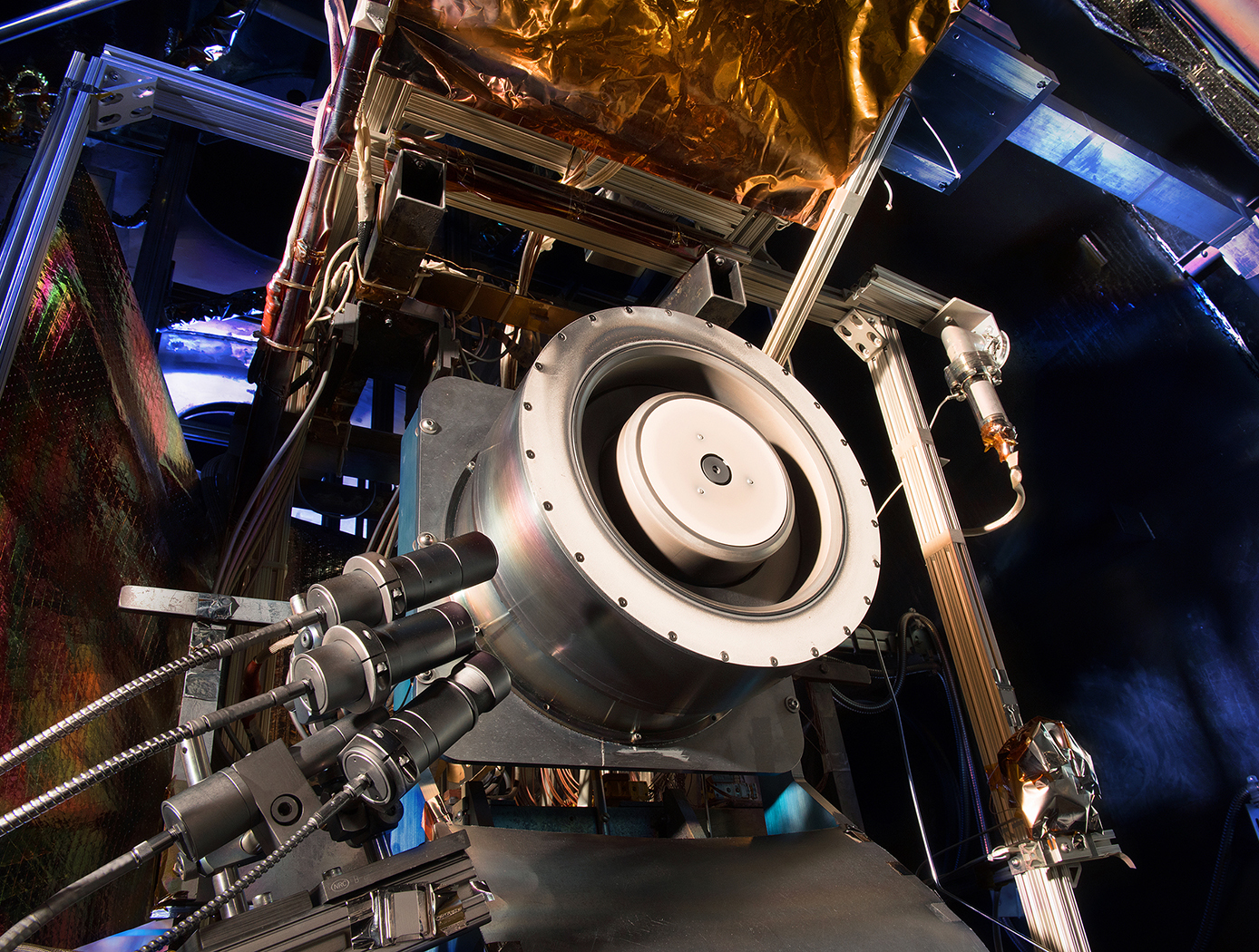
A type of Ion thruster systems based on the discovery of Edwin Hall; using a magnetic field to limit the electrons' axial motion which then gets used to ionize propellant and accelerate these ions to produce thrust (only for those ions to be neutralized in the plume).
Technology
This type of thrusters is very common for propelling deep-space robotic vehicles and earth-orbiting satellites. It functions by trapping electrons with an intense radial magnetic field in an azimuthal Hall current moving around the circumference of an annular ceramic channel.
The electrons in the circulating Hall current ionize the onboard propellant - the inert gas - and create an ionized plasma. The plasma is accelerated axially via the electric field to an exit velocity of up to 65k miles per hour.
Note that gridded ion thrusters suffer from charge saturation and buildup which is why we use neutral plasma here.
Downsides
- Erosion on the anode walls and poles
- Need of an external energy source
- Low thrust
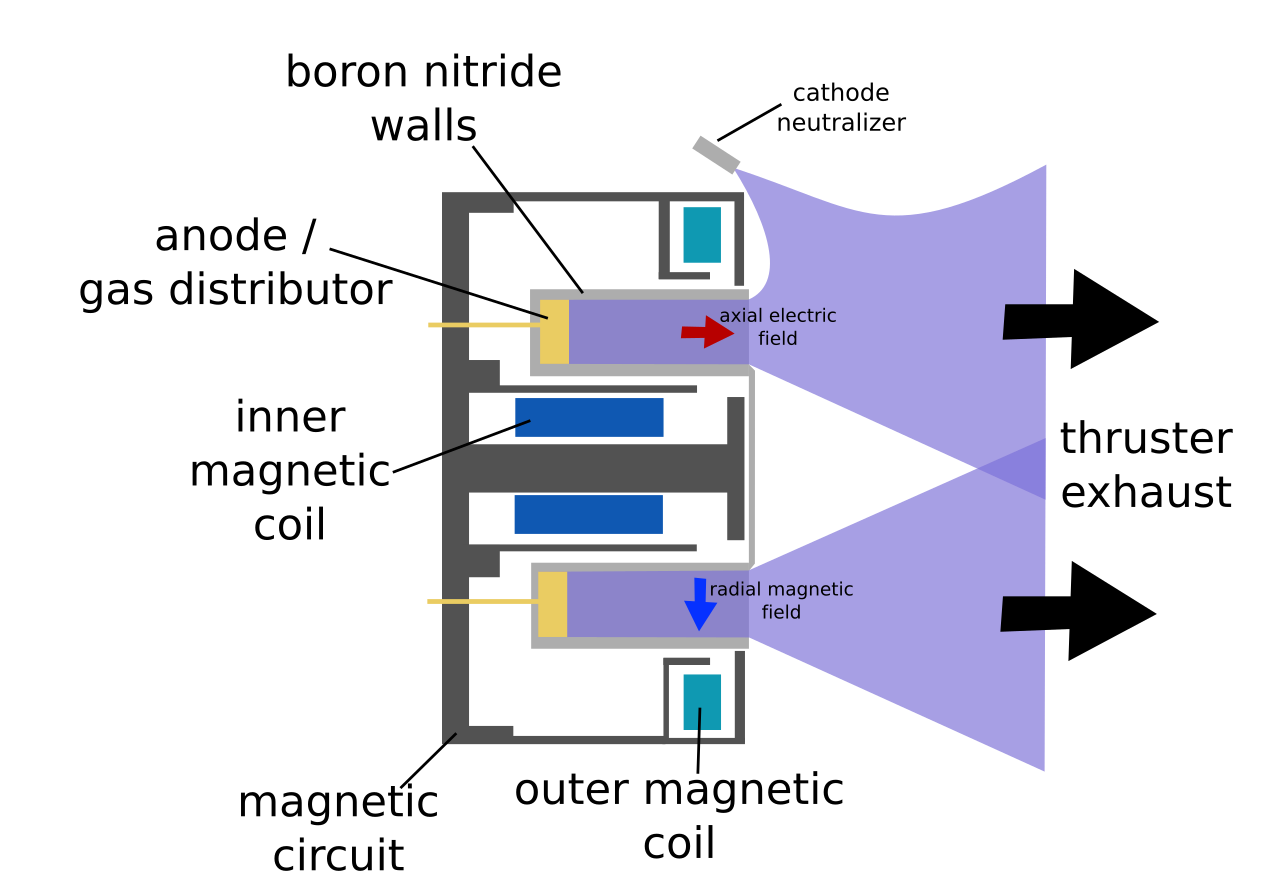
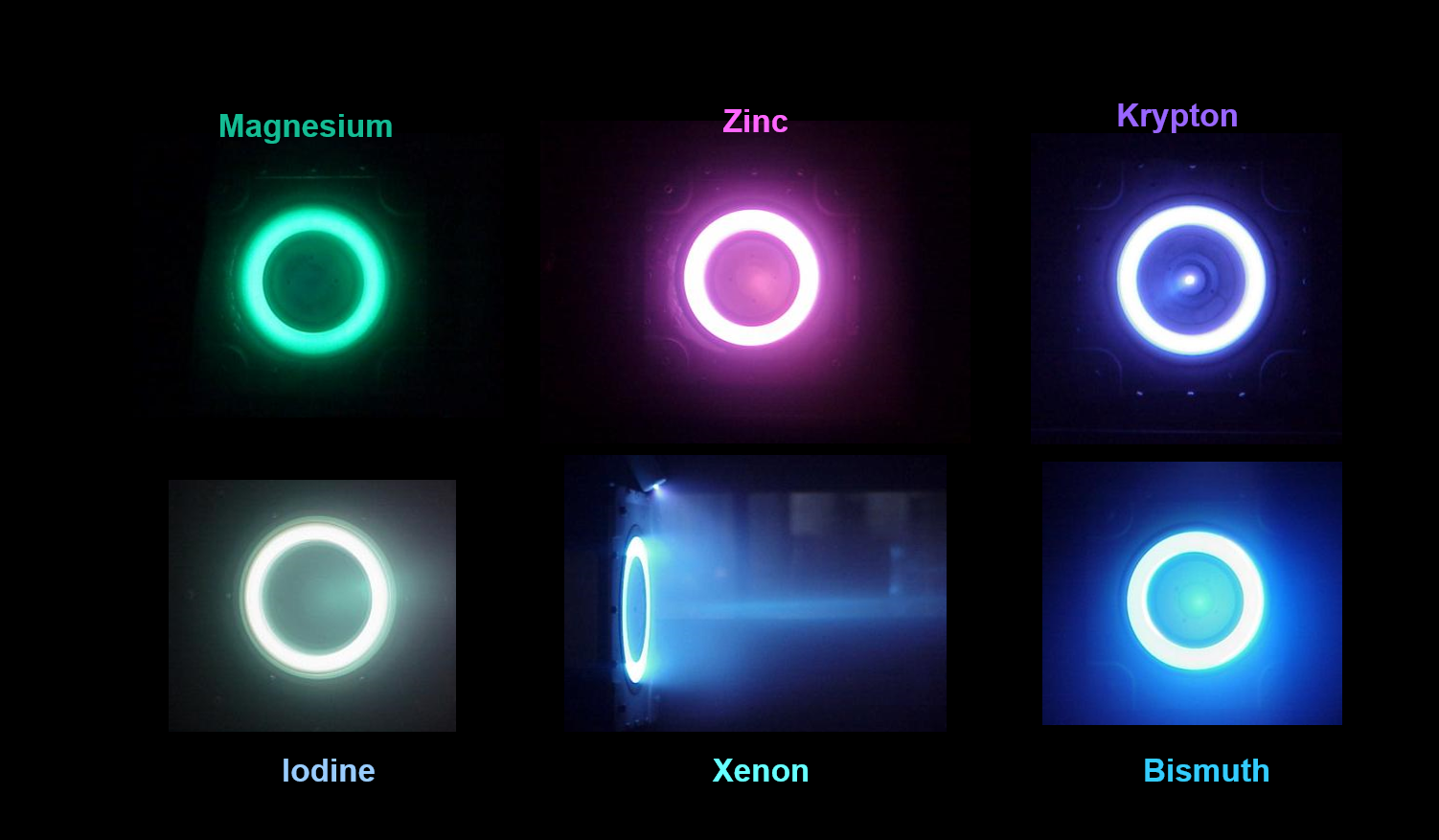
The whole process starts with the electron gun or what is known as a cathode neutralizer. This emits electrons to space; however, we pull some of those electrons with our anode near the discharge channel; we also have a radial magnetic field which traps them in an electron tornado forming the ring that is commonly seen when powering these thrusters. Note that the color of said ring will depend on which gas is used as we will see later:
Now that we trapped electrons inside, we can start releasing some of the neutral gas from the discharge channels. The electrons will hit the neutral gas forming ions. These electrons will then lose kinetic energy post collision and get pulled by the anode. The electrons will flow back through the circuit to reach the cathode.
For the ions that we made, we will simply let them be and they shall accelerate through the electric potential between themselves and the highly negative electron tornado. This makes that the electron ring forms a sort of a virtual grid which functions like the grid in gridded thrusters!
One issue one encounters here is with negative charge buildup in the ring which can start pulling ions back into the thruster...
This is in fact resolved by the same electron gun that lead this whole sequence! These electrons will be emitted at a rate that they will always nearly neutralize the ions leaving the thrusters which creates an electron density near the exit of the thrust that is big enough to neutralize these ions and stop them from going back inside the thruster.
References
Electric Propulsion
Ion thruster
Anomalous Transport Rocket Experiment
Thermionic emission