Electric Propulsion
2026-02-11 07:33
Status: #child
Tags: #aerospace #engineering
Electric Propulsion
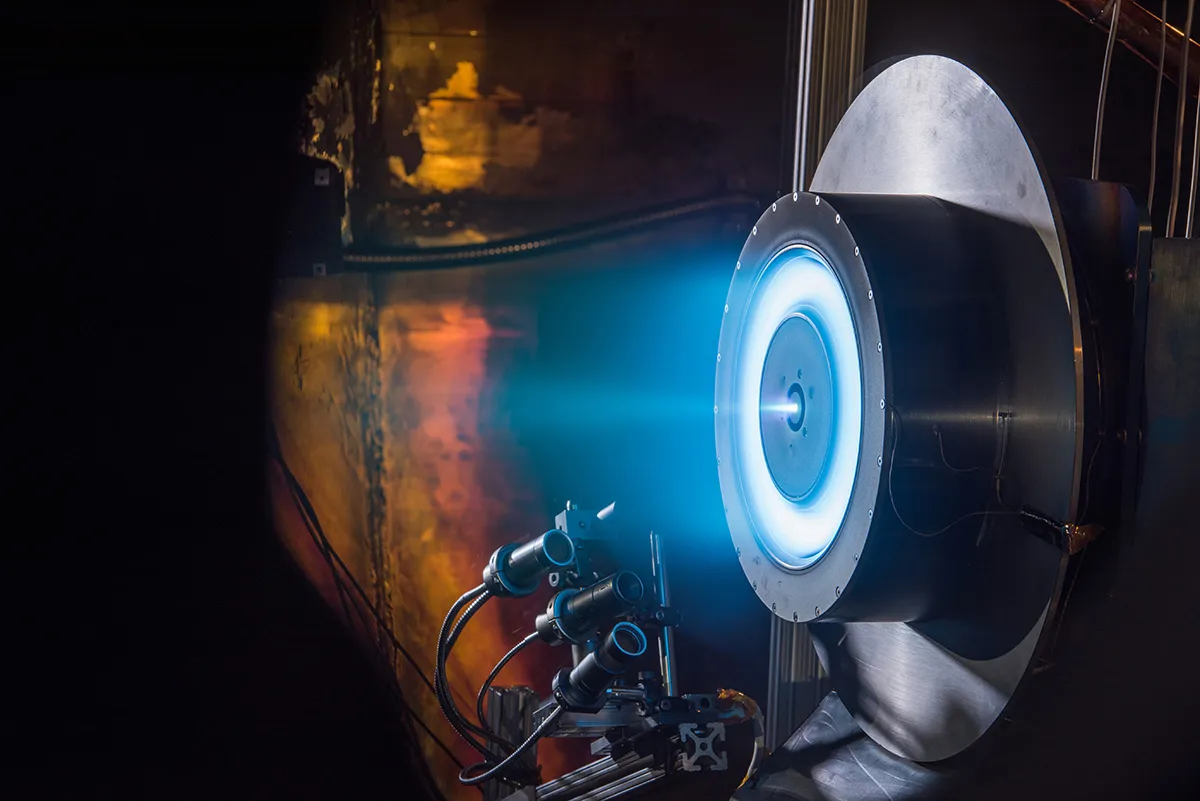
A type of propulsion where the energy source is separate from the propellant; said electrical energy is often "easy" to generate in orbit given the access to solar energy. We often use that harnessed energy for heating and ejecting the propellant.
Worth noting that, in their current state, almost none of the electric propulsion concepts are useful for earth liftoffs.
Thrusters here are the same as engines in liquid propellant and motor in solid propellant rockets.
Beside the energy source which is often solar or nuclear with its auxiliaries, one could summarize these prop systems in 5 components:
- Conversion devices to transform the spacecraft's electrical power to voltages, frequencies, pulse rates, and currents suitable for the prop system in question.
- Thruster(s) to convert electric energy into kinetic energy of the propellant exhaust.
- A propellant system for storing, measuring, and delivering the propellant. i.e., plumbing..
- Controls for starting and stopping power and propellant flow.
- Thrust vector control units (Also known as TGAs-thrust/gimbal assemblies).
Types
- Electrothermal: Propellant is heated electrically and expanded thermodynamically; then we can use multiple converging/diverging nozzles to accelerate the gas to supersonic speeds.
- Electrostatic: Accelerate gas using electrostatic fields with nonneutral or charged propellant particles (i.e., ionized gas)
- Electromagnetic: Have an acceleration through both fields within a cloud of plasma. This tends to use a moderately dense plasmas which can be found in high-temp and/or nonequilibrium gases since these are good conductors. Some devices also add nozzles here to enhance performance.
There are even deeper classifications within those general three like Hall-effect thrusters!